 Rajiv Gangwar · 6 min read
Updated
What Indian applicants should do if officially asked for a China visa interview, personal appearance or additional documents, without scripted answers or guarantees.
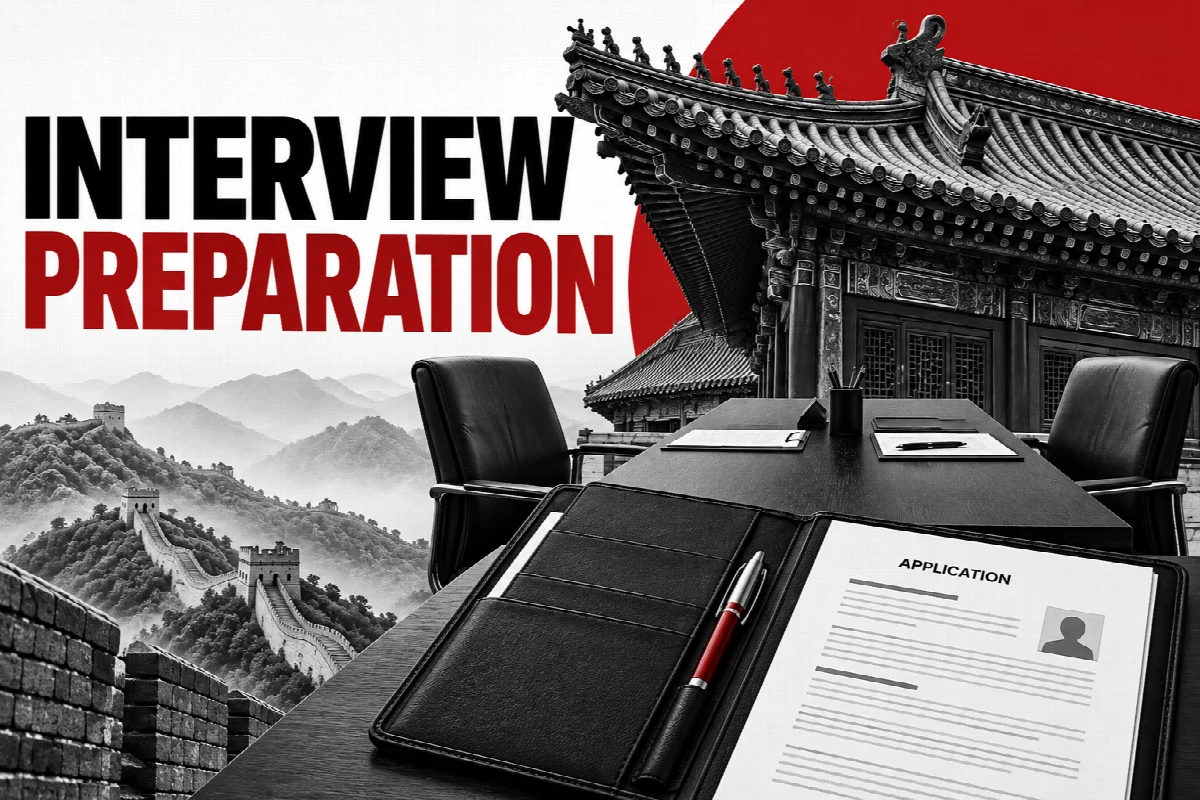
A China visa interview is not a routine step for every applicant. Current official guidance for India says that a consular officer may request an interview or additional supporting documents when considered necessary. If you receive such an instruction, prepare from the application you actually submitted instead of memorising a list of supposed “Embassy questions.”
Is an interview required for every China visa applicant?
No single interview rule applies to every applicant. General guidance allows consular officers to request further documents or an interview, while more specific centre instructions can set requirements for particular categories. The New Delhi physical-submission notice includes interview instructions for S, Q, X and Z applicants. Read the current category and centre instructions as well as messages about your own application; do not assume attendance is optional just because a general FAQ describes interviews as conditional.
Follow the applicable official attendance instruction, including its timing and location. A private agent cannot waive it, and a fingerprint exemption does not by itself waive an interview. The visa decision, validity, duration of stay and number of entries remain matters for the competent authority.
Interview, appearance and document request are different
These terms should not be treated as interchangeable:
- Interview: a consular officer asks the applicant for information. Its format, place and timing must come from the official instruction.
- Personal appearance: the applicant is instructed to attend in person. This may be connected with an interview, submission requirement or another case-specific step.
- Biometric collection: fingerprints are collected when the applicable rules require them. This is a separate procedural requirement and is not itself an interview.
- Additional-document request: the applicant is asked to provide or clarify supporting material. A request for documents does not automatically mean an interview or a refusal.
- Online review: the electronic application is checked before the later steps indicated by the official system. It is not a visa decision.
- Visa decision: the competent Chinese authority decides the application. Attendance or supplying additional material does not guarantee issuance.
Start with the instruction you received
Read the email, portal message or written notice in full. Confirm the date, time, location or online method; which documents are requested; and whether originals or copies are specified. Use contact details published by the applicable official center if the instruction is unclear. Do not send an original passport or other original document to a private service provider unless its need and handling have first been confirmed.
Keep the instruction available when attending or responding. Requirements can vary by application and may change, so a checklist from another applicant is not a substitute for the notice sent in your case.
Re-read the application before responding
Know the facts already stated in your form and supporting documents. This does not mean rehearsing a script. It means checking that you can accurately explain your own application without contradicting it.
Passport and personal information
Review your name, passport details, contact information, occupation or study status, previous passports and travel or application history where declared. If you notice a genuine mistake, do not conceal it or improvise a different fact. Follow the official channel for explaining or correcting it.
Purpose, dates and funding
Be able to state the genuine main purpose of the trip, intended dates and places, expected length of stay, and who will pay the costs. These facts should agree with the category selected and the documentary record.
Category-specific information
A tourist should understand the genuine itinerary and accommodation evidence submitted. A business visitor should know the Indian company, Chinese inviting party, commercial purpose and planned meetings or event. A student should know the institution, programme, study duration and admission documents. A family-visit applicant should be able to explain the relationship and inviter information supported by the file.
The detailed tourist, business and student preparation guides explain those document contexts. They are preparation aids, not predictions of what an officer will ask.
What should you take or have ready?
Bring only what the official instruction and current process require. A sensible preparation file may include the instruction itself, the submitted application or receipt, the passport and the supporting documents relevant to the case. Originals should be carried only where instructed or genuinely applicable; do not assume every applicant needs every original.
If additional information is requested online, provide it through the method stated in the official message. Do not replace a requested document with an unrelated explanation, and do not alter authentic records merely to make the application appear more consistent.
How to answer truthfully and consistently
- Answer the question asked using facts you know.
- Keep dates, names and purpose consistent with genuine documents.
- If you do not understand a question, ask for clarification instead of guessing.
- If you do not know or cannot recall a detail, say so honestly.
- Explain a real discrepancy directly; do not create a story to hide it.
- Do not use fabricated sample answers, fake bookings or altered invitations.
The goal is an accurate explanation of the real trip, not a polished performance. Visa Expertz does not know undisclosed Embassy decision criteria and cannot coach an applicant to conceal information.
What happens after additional review?
The authority may continue reviewing the application after the interview or requested information is provided. Some cases can take longer than a published standard service period. An interview, personal appearance or supplementary-document request does not by itself predict approval or refusal.
Keep the receipt and monitor the official status channel. Avoid making repeated submissions unless instructed. The application guide explains the broader process, while the pre-submission checklist can help identify inconsistencies before responding. For private document-preparation help, the consultation service can review the available file, but it cannot replace official attendance, influence the decision or guarantee an outcome.
Official information checked
For the separate question of whether biometric exemption changes attendance, see fingerprints versus personal appearance. An exemption from one step does not automatically remove an interview instruction.
This guide was checked against the current China visa requirements published for New Delhi applicants and the official Visa Application Service Center's current online-process guidance. The India requirements state that consular officers may request other supporting documents or an interview when necessary; they do not publish a universal list of interview questions.